
新概念一81~89课
81课(260210)
重点攻克一下
have这个词在不同场景下的用法(洗澡、吃饭、喝酒、抽烟),这一课就拿下了
①课文译文
②初次翻译(260210)
第一片段
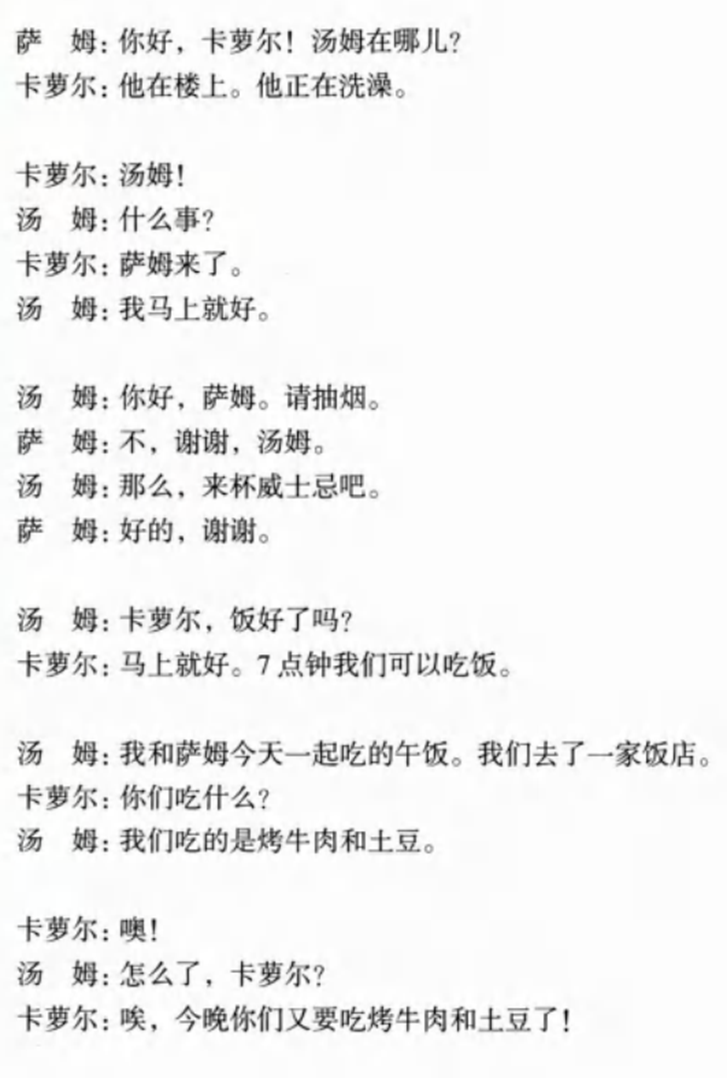
Sam:Hello, Carol! Where is Tom?
Carol: He's upstairs. He's 洗澡ing now.
第二片段
Carol: Tom!
Tom: What's the matter?
Carol: Here is Sam.
Tom: I'm coming.
第三片段
Tom: Hello, Sam. Please have the cigarrate.
Sam: No, thank you, Tom.
Tom: Then, please have a cup of wissigi.
Sam: OK, thanks.
第四片段
Tom: Carol, can we have lunch?
Carol: 马上就好. We can have our dinner at 7 o'clock.
第五片段
Tom: I have lunch with Sam today. We went to a resturant.
Carol: What have you enjoy?
Tom: We ate roast beef and potato.
第六片段
Carol: Ah!
Tom: What's wrong? Carol.
Carol: Uh, you have to eat roast beef and potato tonight.
③自查审核
第一片段
Sam:Hello, Carol! Where is Tom?
Carol: He's upstairs. (他在楼上如何表达?is/in upstairs) He's 洗澡ing now. (正在洗澡如何表达?基础词都忘记了)
第二片段
Carol: Tom!
Tom: What's the matter? (什么事?怎么了?是不是都可以用What's the matter来说,还有What's wrong with you什么时候用呢?)
Carol: Here is Sam.
Tom: I'm coming. (我马上就好?是不是我马上来呢?那就是i‘m coming,又怎么说马上好这个状态呢?)
第三片段
Tom: Hello, Sam. Please have the cigarrate. (请抽烟,have a cigarrate?)
Sam: No, thank you, Tom.
Tom: Then, please have a cup of wissigi. (威士忌词汇,还有有关酒水的词汇)
Sam: OK, thanks.
第四片段
Tom: Carol, can we have lunch? (饭好了吗?如何直译;如果换成可以吃饭了吗?该怎么抛开具体时间的限制,使用词汇呢?现在脑子里只有breakfast、lunch和dinner的词汇)
Carol: 马上就好. (如何直译?如何译为马上吃饭?) We can have our dinner at 7 o'clock.
第五片段
Tom: I have lunch with Sam today. We went to a resturant. (饭店的词。。)
Carol: What have you enjoy? (你们“过去、刚才”吃了什么?还有:你们“想要、等下”吃什么?都怎么表达呢?)
Tom: We ate roast beef and potato. (烤牛肉=烤 + beef吗?这个土豆应该不加es吗?)
第六片段
Carol: Ah!
Tom: What's wrong? Carol. (详见第二片段)
Carol: Uh, you have to eat roast beef and potato tonight.
④纠错学习
AI点评
第一片段
Sam:Hello, Carol! Where is Tom?
改:口语中Where is通常缩写Where's:Where's Tom?
Carol: He's upstairs. (他在楼上如何表达?is/in upstairs) upstairs是副词,前缀动词即可 He's 洗澡ing now. (正在洗澡如何表达?基础词都忘记了) 洗澡是bath,还有一个shower是淋浴;have a bath洗澡/taking a shower淋浴,having a bath/shower正在洗澡、淋浴
改:He's upstairs. He's having a bath.
第二片段
Carol: Tom!
Tom: What's the matter? (什么事?怎么了?是不是都可以用What's the matter来说,还有What's wrong with you什么时候用呢?) 怎么了,什么事:What's the matter?中性的语气,询问发生了什么;哪儿不对劲:What's wrong?侧重于询问是否有错误、故障;What's the matter with you?慎用,口语中容易误解为“你有病吗?”
Carol: Here is Sam.
改:Sam's here.这样说更加口语化,Here is xxx常用于给别人东西
Tom: I'm coming. (我马上就好?是不是我马上来呢?那就是i‘m coming,又怎么说马上好这个状态呢?) It's nearly ready.餐桌上的标准用语;而I'm coming是指人的动作,饭🍚马上好是针对饭的状态
第三片段
Tom: Hello, Sam. Please have the cigarrate. (请抽烟,have a cigarrate?) Have a cigarette.
改:Please have a cigarette.
Sam: No, thank you, Tom.
Tom: Then, please have a cup of wissigi. (威士忌词汇,还有有关酒水的词汇) Whisky -> glass而不是cup,cup是有把手的瓷杯,用来装热饮(茶、咖啡);glass是玻璃杯,用来装冷饮(水、酒、牛奶)
改:Please have a glass of whisky then.then放在句尾更加口语化
Sam: OK, thanks.
第四片段
Tom: Carol, can we have lunch? (饭好了吗?如何直译;如果换成可以吃饭了吗?该怎么抛开具体时间的限制,使用词汇呢?现在脑子里只有breakfast、lunch和dinner的词汇) 最简单直观的表达:is 饭 ready?:is lunch ready?
改:Is dinner ready?
Carol: 马上就好. (如何直译?如何译为马上吃饭?) We can have our dinner at 7 o'clock.
改:It's nearly ready. We can have dinner at 7 o'clock.
第五片段
Tom: I have lunch with Sam today. We went to a resturant. (饭店的词。。)restaurant
改:Sam and I had lunch together today. We went to a restaurant. 吃午饭已经过去->had,英语习惯把别人and我放主语位置,也就是Xyz and I xxxx。
Carol: What have you enjoy? (你们“过去、刚才”吃了什么?还有:你们“想要、等下”吃什么?都怎么表达呢?) 总而言之,吃什么就是have xxx;刚才吃了什么=What did you have?;等下要吃什么=What are you going to have?/What would you like to have?
改:What did you have?
Tom: We ate roast beef and potato. (烤牛肉=烤 + beef吗?这个土豆应该不加es吗?) potato是可数名词,一餐土豆肯定不止一个土豆,所以要加复数,o结尾的名词的复数通常加es:potatoes
改:We had roast beef and potatoes.ate也没错,但是用had更好。
第六片段
Carol: Ah!
Tom: What's wrong? Carol. (详见第二片段)
改:What's the matter?
Carol: Uh, you have to eat roast beef and potato tonight.
改:Well, you're going to have roast beef and potatoes agian tonight.
核对原文
第一片段
Sam: Hi, Carol! Where's Tom?
Carol: He's upstairs. He's having a bath.
第二片段
Carol: Tom!
Tom: Yes?
Carol: Sam's here.
Tom: I'm nearly ready.
第三片段
Tom: Hello, Sam. Have a cigarette.
Sam: No, thanks, Tom.
Tom: Have a glass of whisky then.
Sam: OK. Thanks.
第四片段
Tom: Is dinner ready, Carol?
Carol: It's nearly ready. We can have dinner at seven o'clock.
第五片段
Tom: Sam and I had lunch together today. We went to a reataurant.
Carol: What did you have?
Tom: We had roast beef and potatoes.
第六片段
Carol: Oh!
Tom: What's the matter, Carol?
Carol: Well, you=='re going to have== roast beef and potatoes agian tonight!
83课(260210)
①课文译文
②初次翻译
第一片段:
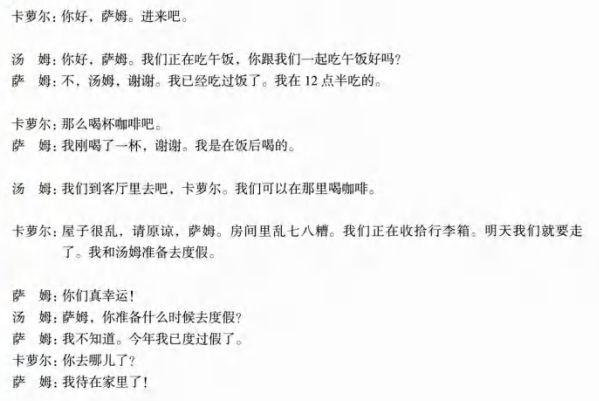
Carol: Hello, Sam. Come in.
第二片段
Tom: Hello, Sam. We're having lunch together, would you like to have lunch with us?
Sam: No, thanks, Tom. I had lunch. I had it at a half past twelve.
第三片段
Carol: Have a cup of coffe then.
Sam: I have drank a cup of it, thanks. I drank it after lunch.
第四片段
Tom: Go to the living room, Carol. We can drink coffee there.
第五片段
Carol: The room is 凌乱. Please forgive us, Sam. 房间里乱七八糟。We're 收拾ing package box. We're going to vocation tomorrow.
第六片段
Sam: You're lucky!
Tom: Sam, When do you go to vocation?
Sam: I don't know. I have spent vocation this year.
Carol: Where're you go?
Sam: I lived at home.
③自查审核
第一片段:
Carol: Hello, Sam. Come in.
第二片段
Tom: Hello, Sam. We're having lunch together, would you like to have lunch with us?
Sam: No, thanks, Tom. I had lunch. I had it at a half past twelve. 这里的关键就是我吃饭 在12点半,后面这个时间的表达
第三片段
Carol: Have a cup of coffe then.
Sam: I have drank a cup of it, thanks. I drank it after lunch.
第四片段
Tom: Go to the living room, Carol. We can drink coffee there.
第五片段
Carol: The room is 凌乱. Please forgive us, Sam. 房间里乱七八糟。We're 收拾ing package box. We're going to have a vocation tomorrow.
第六片段
Sam: You're lucky!
Tom: Sam, When do you go to vocation?
Sam: I don't know. I have spent vocation this year. 换成I had a vocation this year 会不会更好?
Carol: Where're you go? 已经是过去的事情了:Where did you go?
Sam: I lived at home. 怎么突然就把stay at home给忘了?
④纠错学习
AI点评
第一片段:
Carol: Hello, Sam. Come in.
第二片段
Tom: Hello, Sam. We're having lunch together, would you like to have lunch with us? 这里的你好萨姆,其实是我们饭刚做好、萨姆的意思;邀请他人吃xx可以说Will you have some?
改:Lunch is just ready, Sam. We're just going to have lunch. Will you have some?
Sam: No, thanks, Tom. I had lunch. I had it at a half past twelve. 这里的关键就是我吃饭 在12点半,后面这个时间的表达
改:No, thanks. I've already had lunch. I had it at half past twelve.
第三片段
Carol: Have a cup of coffee then.
Sam: I have drank a cup of it, thanks. I drank it after lunch. 英语中用have替代drink、eat非常常见:I've just had one. one指代a cup of coffee✅️
改:I've just had one, thank you. I had one after lunch.
第四片段
Tom: Go to the living room, Carol. We can drink coffee there. 我们去xxx:Let's go;这里也可以用have替代drink
改:Let's go into the living room, Carol. We can have our coffee there.
第五片段
Carol: The room is 凌乱. Please forgive us, Sam. 房间里乱七八糟。 家里乱请原谅:Excuse the mess. We're 收拾ing package box. We're going to have a vocation tomorrow.
改:Excuse the mess. We're packing our suitcase. We're going to leave tomorrow.
第六片段
Sam: You're lucky! Lucky you!
Tom: Sam, When do you go to vocation? 度假=have your holiday/vacation
改:Sam, When do you have your holiday?
Sam: I don't know. I have spent vocation this year. 换成I had a vocation this year 会不会更好?
改:I've already had my holiday this year.
Carol: Where're you go? 已经是过去的事情了:Where did you go?
Sam: I lived at home. 怎么突然就把stay at home给忘了?
核对原文
第一片段
Carol: Hello, Sam. Come in.
第二片段
Tom: Hi, Sam. We're having lunch. Do you want to have lunch with us?
Sam: No, thank you, Tom. I've already had lunch. I had lunch at half past twelve.
第三片段
Carol: Have a cup of coffee then.
Sam: I've just had a cup, thank you. I had one after my lunch.
第四片段
Tom: Let's go into the living room, Carol. We can have our coffee there.
第五片段
Carol: Excuse the mess, Sam. This room's very untidy. We're packing our suitcases. We're going to leave tomorrow. Tom and I are going to have a holiday.
第六片段
Sam: Lucky you!
Tom: When are you going to have a holiday, Sam?
Sam: I don't know. I've already had my holiday this year.
Carol: Where did you go?
Sam: I Stayed at home!
85课(260211)
①课文译文
②初次翻译
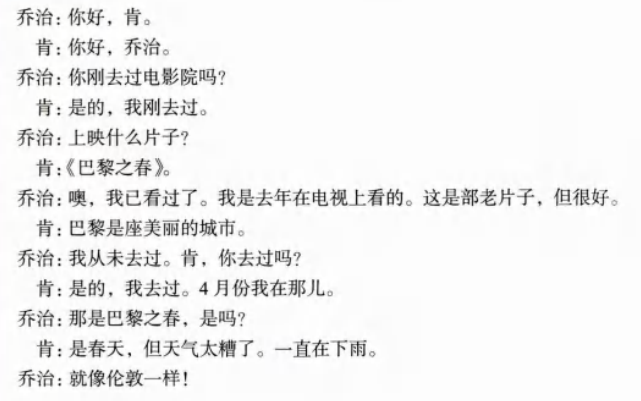
Jeorge: Hello, Ken.
Ken: Hello, Jeorge.
Jeorge: Did you go to the cinema just now?
Ken: Yes, I went.
Jeorge: What's the film broaded?
Ken: The Spring of Paris.
Jeorge: Ah, I have seen it. I saw it on the TV last year. It's an old film, but it's good.
Ken: Paris is a beautiful city.
Jeorge: I never gone. Did you go to Paris, Ken?
Ken: Yes, I went. I was there on April this year.
Jeorge: That's the spring of Paris, right?
Ken: It was spring, but the weather was bad. Days are wet all the day.
Jeorge: Just like Landon!
③自查审核
Jeorge: Hello, Ken.
Ken: Hello, Jeorge.
Jeorge: Did you go to the cinema just now? 去电影院;刚去;都是常用表达,要记一下
Ken: Yes, I went. 对应的回答,我刚去过,我刚没去,也要记
Jeorge: What's the film broaded? 片子;上映;这两个词
Ken: The Spring of Paris.
Jeorge: Ah, I have seen it. I saw it on the TV last year. It's an old film, but it's good.
Ken: Paris is a beautiful city.
Jeorge: I never gone. Did you go to Paris, Ken? 我从未去过,怎么说?去是go went gone,从来没有就是never,never go?强调事实和现在的状态?为什么我会写never gone呢?
Ken: Yes, I went. I was there on April this year.
Jeorge: That's the spring of Paris, right?
Ken: It was spring, but the weather was bad. Days are wet all the day. 这样要用is还是was呢?后一句应该是It's wet all the day.
Jeorge: Just like Landon!
④纠错学习
AI点评
Jeorge: Hello, Ken.
Ken: Hello, Jeorge.
Jeorge: Did you go to the cinema just now? 去电影院;刚去;都是常用表达,要记一下 Just刚刚,通常与现在完成时连用,表示动作刚结束;Have been to和Have gone to 都是刚刚去过,前者是现在已经回来了,后者是现在还没有回来。或者理解为:前者强调经历,后者强调当下状态
改:Have you just been to the cinema?
Ken: Yes, I went. 对应的回答,我刚去过,我刚没去,也要记 对应上面的说法,回答Have been to
改:Yes, I have.
Jeorge: What's the film broaded? 片子;上映;这两个词 片子就是film,broad是广播、播送,不能形容电影上映
改:What's on. 地道表达,问正在上映什么电影、电视正在演什么
Ken: The Spring of Paris.
改:Paris in the Spring.
Jeorge: Ah, I have seen it. I saw it on the TV last year. It's an old film, but it's good.
改:Oh, I have already seen it. I saw it on television last year.
Ken: Paris is a beautiful city.
Jeorge: I never gone. Did you go to Paris, Ken? 我从未去过,怎么说?去是go went gone,从来没有就是never,never go?强调事实和现在的状态?为什么我会写never gone呢? 从未去过:Have never gone/been 又因为Jeorge在乔治面前,肯定现在人回来了,所以是been
改:I've never been there. Have you ever been there, Ken?
Ken: Yes, I went. I was there on April this year. 年月季度前用in、某一天用on、具体时刻用at
Jeorge: That's the spring of Paris, right? 这里想要表达的是“巴黎的春天很棒吧?”
改:Spring in Paris is wonderful, isn't it?
Ken: It was spring, but the weather was bad (awful). Days are wet all the day. 这样要用is还是was呢?后一句应该是It's wet all the day. 整天都很湿、总是下雨:It rained all the time. all the time指总是、一直;all the day是一整天
Jeorge: Just like Landon!
课文原文
George: Hello, Ken.
Ken: Hi, George.
George: Have you just been to the cinema?
Ken: Yes, i have.
George: What's on?
Ken: Paris in the Spring.
George: Oh, I've already seen it. I saw it on television last year. It's an old film, but it's very good.
Ken: Paris is a beautiful city.
George: I've never been there. Have you ever been there, Ken?
Ken: Yes, I have. I was there in April.
George: Paris is the Spring, eh?
Ken: It was Spring, but the weather was awful. It rained all the time.
George: Just like Landon!
87课(260211)
①课文译文
②初次翻译
第一片段
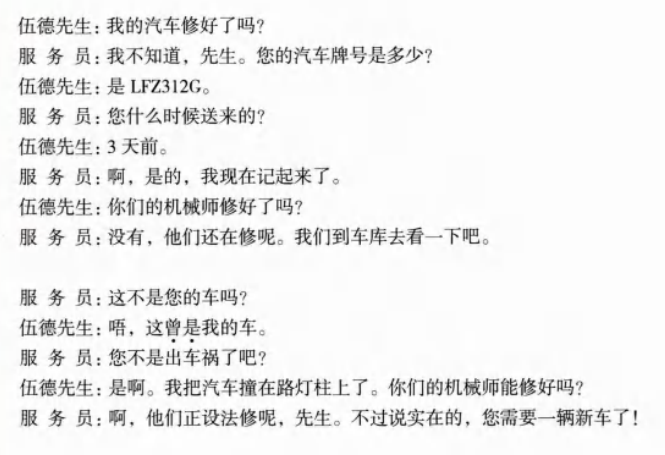
Mr. Wood: Have you fixed my car?
Attendant: I don't know, Sir. What's your car number?
Mr. Wood: it's LFZ312G.
Attendant: What's the time you sent your car?
Mr. Wood: 3 days ago.
Attendant: Ah, sure, I remember it now.
Mr. Wood: Have your machenic fixed it?
Attendant: No, they are fixing. Let's go to the 车库 to see it.
第二片段
Attendant: Isn't that your car?
Mr. Wood: Uh, it was my car.
Attendant: Did you 出车祸?
Mr. Wood: Yes, I drove my car to the 路灯柱. can your 机械师 fix it?
Attendant: Ah, They are fixing it, Sir. But to be honest, you need a new car!
③自查审核
第一片段
Mr. Wood: Have you fixed my car?
Attendant: I don't know, Sir. What's your car number?
Mr. Wood: it's LFZ312G.
Attendant: What's the time you sent your car? 送车来,是send吗?
Mr. Wood: 3 days ago.
Attendant: Ah, sure, I remember it now.
Mr. Wood: Have your machenic fixed it?
Attendant: No, they are fixing. Let's go to the 车库 to see it. 车库的单词
第二片段
Attendant: Isn't that your car?
Mr. Wood: Uh, it was my car.
Attendant: Did you 出车祸? 出车祸的表达
Mr. Wood: Yes, I drove my car to the 路灯柱. can your 机械师 fix it? 撞路灯柱的表达
Attendant: Ah, They are fixing it, Sir. But to be honest, you need a new car! 设法做某事。。
④纠错学习
AI点评
第一片段
Mr. Wood: Have you fixed my car? 去店里拿东西的口语:Is my xx ready yet?
改:Is my car ready yet?
Attendant: I don't know, Sir. What's your car number?
改:What's the number of your car?更正式一些
Mr. Wood: it's LFZ312G.
Attendant: What's the time you sent your car? 送车来,是send吗? send是派送、寄送;”带来“应该用bring
改:When did you bring it to us.
Mr. Wood: 3 days ago.
Attendant: Ah, sure, I remember it now.
Mr. Wood: Have your machenic fixed it? 机械师、修车工:Mechanic
改:Have your mechanics finished yet?
Attendant: No, they are fixing. Let's go to the 车库 to see it. 车库的单词 garage[ˈɡærɑːʒ]车库;work on something从事、处理某事
改:No, they are still working on it. Let's go into the garage and have a look at it.
第二片段
Attendant: Isn't that your car?
Mr. Wood: Uh, it was my car.
Attendant: Did you 出车祸? 出车祸的表达 出车祸:Have a crash/have an accident
改:Didn't you have a crash?难道你没出车祸吗?
Mr. Wood: Yes, I drove my car to the 路灯柱. can your 机械师 fix it? 撞路灯柱的表达 撞进、撞上:drive into,drive to表示把车开到xx旁边;lamp-post路灯柱
改:Yes, I drove it into a lamp-post. Can your mechanics repair it? repair比fix更正式,指处理复杂的机械
Attendant: Ah, They are fixing it, Sir. But to be honest, you need a new car! 设法做某事。。 try to do设法做
改:Well, they're trying to repair it, sir. But to tell you the truth, xx
课文原文
第一片段
Mr. Wood: Is my car ready yet?
Attendant: I don't know, sir. What's the number of your car?
Mr. Wood: It's LFZ312G.
Attendant: When did you bring it to us?
Mr. Wood: I brought it here three days ago.
Attendant: Ah yes, I remember now.
Mr. Wood: Have your mechanics finished yet?
Attendant: No, they're working on it. Let's go into the garage and have a look at it.
第二片段
Attendant: Isn't that your car?
Mr. Wood: It was my car.
Attendant: Didn't you have a crash?
Mr. Wood: That's right. I drove it into a lamp-post. Can your mechanis repair it?
Attendant: Well, they're trying to repair it, sir. But to tell you the truth, you need a new car!
89课(260211)
①课文译文
②初次翻译
第一片段
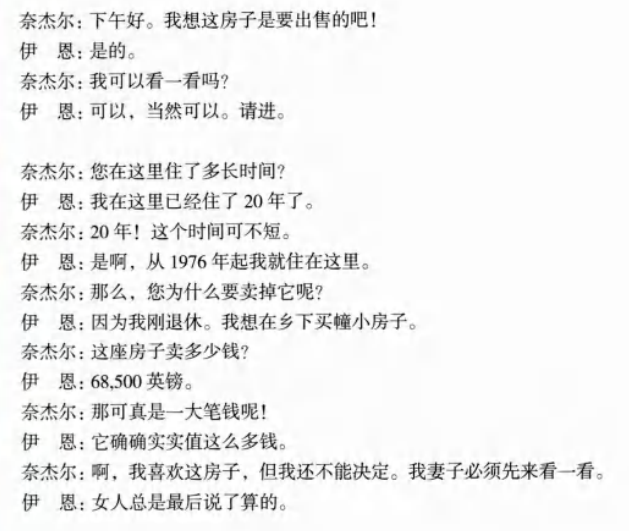
Nigel: Good afternoon. I think this house is for sale?
Ian: Yes.
Nigel: May I have a look?
Ian: Sure. Please come in.
第二片段
Nigel: How long have you been here?
Ian: I have been here for twenty years.
Nigel: Twenty years! It's not a short time.
Ian: Yes, I have been here since 1976.
Nigel: Then, why do you sale it?
Ian: Because I jsut retired, I want to buy a house in the countryside.
Nigel: How much this house is?
Ian: It's 68500 pands.
Nigel: That's a big money!
Ian: It deserve this price.
Nigel: Well, I like this house, but I can't decide now. My wife must have a look at it.
Ian: Women always decide at last.
③自查审核
第一片段
Nigel: Good afternoon. I think this house is for sale? 出售的表达
Ian: Yes.
Nigel: May I have a look?
Ian: Sure. Please come in.
第二片段
Nigel: How long have you been here? 在这里住了多长时间
Ian: I have been here for twenty years.
Nigel: Twenty years! It's not a short time. 这个时间可不短
Ian: Yes, I have been here since 1976.
Nigel: Then, why do you sale it? 买是buy,卖是?
Ian: Because I jsut retired, I want to buy a house in the countryside. 刚刚是just,退休是retire,这样表达应该没错吧。。;乡下是不是countryside?买一幢房子
Nigel: How much this house is? 这个东西多少钱
Ian: It's 68500 pands. 磅、美元、日元、人民币都怎么表示?
Nigel: That's a big money!
Ian: It deserve this price.
Nigel: Well, I like this house, but I can't decide now. My wife must have a look at it.
Ian: Women always decide at last. 女人总是最后说了算的?
④纠错学习
AI点评
第一片段
Nigel: Good afternoon. I think this house is for sale? 出售的表达 出售、卖:sale(n.)/sell(v. sold sold),前者搭配for表示for sale待售
改:I believe that ...比 I think that ...更正式、礼貌,表示我想、我相信:I believe that this house is for sale.
Ian: Yes. That's right.
Nigel: May I have a look?
改:May I have a look at it, please?
Ian: Sure. Please come in. Yes, of course.
第二片段
Nigel: How long have you been here? 在这里住了多长时间 been here 可以换成 lived here
改:How long have you lived here?
Ian: I have been here for twenty years.
改:I've lived here for twenty years.
Nigel: Twenty years! It's not a short time. 这个时间可不短 经典的老中思维,应该直接表达对时间长度的震撼:That's a long time.
Ian: Yes, I have been here since 1976.
Nigel: Then, why do you sale it? 买是buy,卖是? 卖是sell
改:Why do you want to sell it?你为什么想要卖掉它
Ian: Because I jsut retired, I want to buy a house in the countryside. 刚刚是just,退休是retire,这样表达应该没错吧。。;乡下是不是countryside?买一幢房子 “刚刚”对现在有影响,通常用现完,而且这个just提示词也提示了现完;在乡下可以说in the country/in the countryside
Nigel: How much this house is? 这个东西多少钱 语法错误了,应该是How much is this house? 然后更地道的表达是How much does this house cost?
改:How much does this house cost?
Ian: It's 68500 pands. 磅、美元、日元、人民币都怎么表示? (£)磅pounds;($)美元dollars; (¥)日元Yen 单复数同形; (¥)人民币Yuan 或 RMB单复数同形;(€)欧元Euros
改:口语中可以直接报数字:Sixty-eight thousand five hundred pounds.
Nigel: That's a big money! money是不可数名词,不能用a修饰,许多钱应该用a lot of形容
改:That's a lot of money!
Ian: It deserve this price. worth every penny物有所值 penny是最小钱币单位便士
改:It's worth every penny of it.
Nigel: Well, I like this house, but I can't decide now. My wife must have a look at it. My wife must see it first.更简洁
Ian: Women always decide at last. 女人总是最后说了算的? Women always have the last word.
课文原文
第一片段
Nigel: Good afternoon. I believe that this house is for sale.
Ian: That's right.
Nigel: May I have a look at it, please?
Ian: Yes, of course. Come in.
第二片段
Nigel: How long have you lived here?
Ian: I've lived here for twenty years.
Nigel: Twenty years! That's a long time.
Ian: Yes, I've been here since 1976.
Nigel: Then why do you want to sell it?
Ian: Beacuse I've just retired. I want to bug a small house in the country.
Nigel: How much does this house cost?
Ian: £68500.
Nigel: That's a lot of money!
Ian: It's worth every penny of it.
Nigel: Well, I like the house, but I can't decide yet. My wife must see it first.
Ian: Women always have the last word.